Showing posts with label Oil & Gas. Show all posts

Sunday, 5 July 2015

Embracing The Future Of Human Factors Training


There has long been a paradox in Human Factors (HF) and Crew Resource Management (CRM) training interventions- how do you recreate the 'live' scenarios you're trying to teach? Replicating specific conditions associated with Human Factors is very challenging for a trainer, furthermore replicating the emotions nearly impossible. For a long time we (HBP-Training) have believed that a HF approach to training can reach farther than the prevention of accidents, it can be used as the primary vehicle for team development, leadership & management training, stress awareness training and employee engagement. When examined, the different elements that comprise the full spectrum of HF are all closely linked and very much influenced and coerced by human behaviour and emotion. After all it is the liveware interface with it's surrounding components that is the fundamental basis of understanding how accidents, incidents and near misses arise and more importantly to our organisation, how they don't.

Maersk Immersive Training Simulator

With this in mind, any technology which enhances and improves the delivery of training should be embedded within the fabric of HF & CRM delivery. For some time now aviation has used hi-tech simulators to accelerate pilot performance and development, other industries are following such as Oil & gas with Maersk Training amongst others (above). There is, however, a disconnect in this technology, a void in which HF & CRM have so far found themselves entrapped. There are two reasons the current technology does not lend itself to HF delivery. The first is the nature of the technology is specific to individual roles although I acknowledge it can be adapted if needed. This makes it a fantastic tool for a very specific demographic, i.e. pilots in aviation. The second problem lies in the transferability of such technologies. These fixed immersive units, although magnificent and expensive in equal measures, do not lend itself to the ubiquitous nature of HF & CRM training. Perhaps the Human Factors solution with immersive training technology lies in the middle ground?

We believe that accessibility and mobility are the key components to really accelerate the capability of immersive training in HF delivery - whether in aviation, oil & gas, healthcare or even the financial sector.

Such technology exists in the form of MDT Global Solutions Immersive Simulator which is a fully portable projector enabling set up in any classroom environment with three available walls. This capability adds a further dimension to the delivery of such training interventions, it enables 'live' moment-to-moment decisions and generates the opportunity and also perspective for delegates to watch incidents unfold - and most importantly offers an influence on different outcomes. There is another benefit of this technology, it can be used to record the fixed and expensive immersive assist to then transport and project to a wider demographic. We now have the ability to discuss certain areas of Human Factors or even specific case studies, then bring the scenario alive with this technology.

This now takes us to the next generation of Human Factors and Crew Resource Management delivery....


Wednesday, 13 May 2015

Can You Multitask?


I was once walking while concurrently texting, a common multitask I would suggest? While walking, and although believing my judgement not impaired, I collided with a young boy knocking him to the ground. I’m sure you can imagine my guilt and embarrassment while profusely apologising to the mother of the young boy – she called me an idiot, she was right.

Consequence is a topic that is routinely discussed within Human Factors, often there is little perceived consequence with many of our routine actions. During my texting incident I would of made unconscious calculations and assumptions to predict the likely outcome of my walk, these are known as heuristics. My unconscious brain would of used these heuristics to fill the blanks between my divided conscious attention. The common misconception in examples like this is you are ‘multitasking’; in fact I am actually dividing my focus of attention between the individual tasks of walking and texting. While consciously focussing on texting I incorporate unconscious heuristics to predict potential future outcomes from my walk, often  successfully. I am, however, playing Russian roulette and eventually something will happen outside my diluted awareness, perhaps in the form of a young boy?

Often these are the conditions that can lead to accidents in dangerous industries. Routine jobs are sometimes the most perilous due to the human operative perception of consequence. If we believe an action has little or no perceived danger we can become wilfully blind to the consequence.


Let me pose some questions – most people would admit to walking and texting, would you  still freely admit to texting while driving? If you do, my next question is would you of considered texting on the drive back from successfully passing your test? The two ingredients I’m alluding to here are consequence and perception. Obviously there are not the same associated consequences with walking and texting as with driving and texting. However, can you agree there is a possible consequence of being hit by a car, if distracted while walking? The second part of this is perception, both of likely danger and also the self-perceived limited ability of a newly qualified driver, colloquially described as ‘self-confidence’. In the realm of the conscious / competence matrix a newly qualified driver would probably be in the conscious competence corner. At this stage the driver will exibit a concentrated focus of attention on the single task of driving safely, once the driver progresses into unconscious competent added tasks will become possible, like conversations and music etc  Herein lies the danger for industries with task repetition. The human operative will logically become unconsciously competent given time, which will develop the possibility of the added capacity to ‘multitask’, and this is often  without incident. The problem only becomes apparent once an added danger is introduced into the equation away from the conscious attention of the worker. In this moment consequence and perception are brought crashing back to earth but often at this point it is too late, not unlike my collision with the young boy.


Distractions can, and should be avoided. An effective toolbox talk that highlights potential lapses in concentration and factors in measures of prevention is key. Understanding the effect of continuous periods of concentration and the onset of fatigue can also be highlighted and prevented at the toolbox talk stage. Proactive task management with awareness of the consequence of perceived routine work and the specific dangers associated with human operatives operating in the unconscious competent quadrant can bring back into the conscious awareness the potential dangers. 

A final thought to ponder? There is a misconception that multitasking is a good thing because of the time saved with concurrent workflow activity. Studies have proven that dividing your attention between tasks actually takes longer than concentrating on each task individually.


Safer and more productive, there’s a thought?      

Wednesday, 7 January 2015

Living In a Shadow


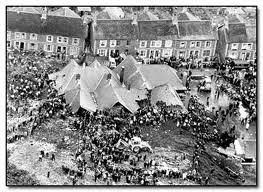
I have frequently tried, unsuccessfully, to write an article about the Aberfan coal disaster of 1966. Without doubt, its one of the most tragic disasters to recount, and perhaps this is why it is so difficult to write a neutral and balanced article about it? Recently I have finished reading the brilliantly insightful ‘Wilful Blindness’ by Margaret Heffernan, which ‘nudged’ me to finally complete this blog. Throughout the book, without actually referencing Aberfan, there are examples immediately recognisable to the conditions that led to that fateful day in 1966. Aberfan was a disaster so great it scarred a community still felt today and wiped out an entire generation of children. 

There are seminal moments in time that are so significant they scar your memory with your location and what you were doing when you first heard the news. Tragic, or triumphant, they become ingrained in memory. The Twin Towers, or the assassination of JFK. England winning the world cup, or Andy Murray winning Wimbledon, they become psychological watersheds in your timeline; for better or worse. The Aberfan coal disaster is such an event.

For over 50 years the National Coal Board (NCB) deposited millions of cubic metres of colliery waste on Merthyr Mountain above the village of Aberfan. These ‘slag heaps’ lay on porous sandstone rock, which in turn contained multiple natural springs below ground, and streams above. Villagers and miners had expressed their concerns about the natural springs that lay beneath the nearly 800ft high waste tip for years. These concerns were dismissed by the NCB who reassured the local community what they were doing was safe practice. On the morning of 21 October 1966 after days of continuous rain a process called thixotropy occurred beneath the slagheap, this released around 40,000 cubic metres of unwanted coal and rock drenched in rainwater onto the village below. Before reaching the Pentglas School it destroyed 20 houses and a farm. The children of the School were taking part in the morning assembly, while singing ‘All things bright and beautiful’ the rumbling of the fast approaching landslide was heard. On this terrible morning 28 adults and 116 children between the ages of 7 – 10 were killed.


This abhorrent wilful blindness and callous hubris from the NCB management, and in particular it’s Chairman Lord Robens, created a ticking time bomb of unimaginable proportions.

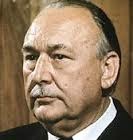
The tragic irony of the wilful blindness exhibited by many involved in the months leading up to the disaster was the transparency of the problem. The dangers were clear for all to see, and furthermore many villagers and miners intuitively knew this practice would sooner or later fail. Transparency is a good thing within any risk managing industry, with transparency comes accountability. Often in the presence these conditions people do the ‘right’ things; without it present the opposite can occur.  There is a paradox of transparency with the Aberfan disaster however. On one hand there can be nothing more openly visible and transparent than an 800ft slack coal heap, lay on springs and clearly marked on OS maps of the area. On the other hand, the information known by the NCB was concealed within the shadows, both before and after the tragedy. Large human factor accidents are rarely the work of criminals, more likely repeated examples of human fallibility and misadventure, or at worst gross incompetence by few. The leadership and management of the NCB came in for scathing criticism during the Davies inquiry and subsequent report, particular blame was attributed to Lord Robens who had shown a complete lack of honesty both before and after the disaster. Amongst the worst acts of dishonesty, Lord Robens denied knowledge of the springs beneath the tip; this infuriated the villagers who knew this not to be true. He also claimed they were not to a contributing factor to the disaster. Lord Robens also staunchly refused to pay the £150,000 needed for the removal of further tips, adding further distress to the grief stricken community. Eventually this bill was paid by the disaster relief fund set up to give financial aid to the village, this would be a heinous wrong that would remain so until the incoming Labour government of Tony Blair, in 1997, instructed the money be paid back. Press intrusion in the aftermath further increased the suffering and distress felt by the villagers who were placed under an intrusive media spotlight. Claims by some of the villagers that a journalist had been heard encouraging a child to cry for her lost friends to enhance the drama of a photograph were appalling, to say the least.

This was contrasted by the public outpouring of sympathy for the grief striken community, which resulted in nearly £1.6 million being raised. To place this into context this would be over £21 million today without the Internet, social media or constant news coverage.


There were many lessons learnt after Aberfan. The Davis Enquiry was rightfully scathing of the management and leadership of the NCB and particularly Lord Robbens. Incredibly, however, Lord Robens kept his job and its perhaps his conduct after the tragedy that draws the most criticism. Most of all there was an incredible lack of transparency displayed by the NCB leadership. Transparency is a wonderfully honest quality, when behaviour is transparent it is usually honest and correct. Even when the behaviours are wrong, they are more often unintentional and can be corrected without serious reprimand. Consider this, can you ever recall getting caught doing something wrong. The instant reaction is to cover up and conceal the truth, human behaviour tells us people don’t conceal or cover up their actions when they’re doing the ‘right’ thing.

I can’t help but wonder that had there been more transparency in 1966 we may have been able to avoid one of the most tragic events of the 20th century?     

Friday, 2 January 2015

The Cost of Uncertainty


The recent downturn in the price of oil has sent shock waves through the Oil & Gas industry worldwide. The prolonged and steady fall in value since June has left the industry with an end of year price of less than $60 per barrel. There are many ways to look at the cause and effect equation of this, for many countries that import oil this signals good news with the price of fuel tumbling in recent months. In fact any industry that requires fuel to operate should be reaping the fruits of this crude oil tumble in value. The international politics of this current situation is seismic, the UK with than 1.8% of the world production is dually concerned, also it furthermore highlights the precarious wealth enjoyed in Aberdeen – what will the city do after the Oil & Gas is finished? 

If this is the political effect of the drop in value, what is the upstream cost to the safety of those working within this dangerous industry?

When shares tumble companies usually look to streamline operations in various fast and arguably effective ways. Reduce the workforce, stop hiring, and reduce training and development are all viable options to weather the storm.  All of these have produced disastrous safety consequences in the past however, both financially and reputational. There can be no uncertainty; safety and profit should never be confused. Lord Cullen emphasised this in his enquiry after Piper Alpha, and the same charge was given to the Deep Water Horizon platform. NASA has also felt this pain periodically with major shuttle losses within their space program in different decades, both with the same charge - compromising safety because of profit. CEO’s should be under no illusion that the message they give to their executives is resonated through the managers and magnified throughout the installations. This is especially prevalent during a period where the mainstream media appears to be fuelling concern for the future of the industry in the UK. Strong and dynamic leadership is imperative, as many working in this sector will be counselling caution for the forecasted growth uncertain times lay ahead. This uncertainty can be the final component needed to create the conditions required for a big accident. BP felt this pain with their CEO’s confusing ‘every dollar counts’ message, which was the precursor for the Macondo blow out. 

In fact many of the biggest accidents experienced in industry are found in the company of investment cuts and uncertainty.

This current downturn should not be the catalyst for a compromise in safety training; in fact we believe it can have a contribution to the cost effectiveness and profitability long term. Effective Human Factors training has many benefits; the Aviation industry knows this and regardless of fluctuation in share prices all aviation pilots and cabin crew must complete regular Crew Resource Management (CRM) training. Since mandatory CRM training was introduced this industry as seen a huge reduction in near misses and accidents, the upstream effect of this improved profit projections. When this training is applied alongside simple and effective management software the result is a safety culture that understands the human element contributing to accidents. 


There is a secondary gain from a safety culture; a reduction in accidents is an increase in profits. In these challenging times this can only be seen as a positive?  

Friday, 28 November 2014

Straightening The Deck Chairs On The Titanic


It is always preferential to have foresight where possible, as opposed to hindsight. Working today to prevent the accidents of tomorrow seems to be a sensible approach to Human Factors. With this in mind the irony of our blog writing has not escaped us, constantly we find ourselves looking backwards for examples of accidents to use within the articles. Often these examples are very tragic and sometimes difficult to relive, this is also something that does not escape us. This is important because to develop clear foresight requires an occasional touch of hindsight. The past is where our questions wait, and more importantly the answers to these questions lay, we need to shine a light on these shadows to illuminate the lessons.

                                             The crew of Titanic including Cap Smith

The Titanic presents, in our opinion, the single greatest lesson in Human Factors. When examined, nearly every strand of modern Human Factors is present within this single story. The Titanic lesson is so strong it has now become a metaphor for Human Factors.

Recently it was suggested that investment in ‘prevention focused’ training should be measured against the likely occurrence of a ‘big’ event becoming reality. Is it better to surrender to the hand of fate and hope that chance smiles on you (and potentially save money), or invest and prepare for an unlikely reality? This statement mirrors the corporate mentality of the White Star Liner when designing and building the Titanic. Discussing all of the contributing factors into this disastrous trans Atlantic crossing, from design and build to its maiden voyage, could not be achieved in one blog. With that in mind we would like to focus on one particular contributing element; the mindset and attitude of those involved.

Most organisations that have experienced a sizable accident will of held the mindset of ‘it might never happen’. Added to this investment in preventing something that might not actually become a reality is sometimes a difficult expense to swallow. This can create a paradox of planning and training for an unlikely event, hence the title ‘tidying the deck chairs on the Titanic’. The further paradox with this mindset is you can’t measure the accidents you never had!  

Is it better to ‘appear’ you are serious about accident prevention while really focusing on the more immediate and pressing issues associated with operating a large business? Surely as long as there is a measured approach that complies with industry recommendations this is fine, isn’t it?

Perhaps not?

The designers of the Titanic thought they had created an unsinkable ship, this provides the perfect conditions to test such profound humanistic statements. There is a famous saying that nature does not respect the qualifications or the competence of men. This statement can be applied to avalanches in mountaineering, fog and high winds to airline pilots and, as with Titanic, icebergs and ships Captains. Nature does not recognise their competence nor does it spare them when the time of reckoning comes. The Titanic had lifeboat capacity for only half of its passengers, because they presumed it was unsinkable. Recent evidence has surfaced that before departing Southampton a civil servant called Maurice Clarke expressed serious reservations about Titanic’s lifeboat capacity. His superior’s threatened Mr Clarke’s job and the original recommendation of increasing Titanic’s lifeboat fleet by 50% was overruled. Had this come to light during either the British or American enquiry there may have been a stronger case for corporate manslaughter against the White Star Liner?

                                                Computer regeneration of Titanic 

This ‘invincible’ mindset was intoxicating; the passengers believed it, the ships builders believed it and the crew did also. Even immediately after the iceberg struck still many felt safe. Perhaps the most poignant example of this wilful blindness was that of Wireless Officer Phillips. He was responsible for sending and receiving messages on the one radio channel that Titanic had, he chose to prioritise wireless transmissions of the super rich 1st class passengers over the iceberg warnings. Mr Phillips went down with the ship, sending SOS messages to the end.

                                                 Both parts of Titanic on the sea bed


Although this seems an extreme example from over 100 years ago, do we still exercise this ‘wilful blindness?’ The answer in short is yes, albeit rarely thankfully. We need look no further than the Costa Concordia for a stark reminder of the hubristic inclination of man.  Part of this fallibility is our romance with courting chance, whether in a casino, bungee jumping off a bridge or performing a flamboyant manoeuvre with a large ship.  Human Factors learns the lessons of the past so to implement today for a safer future. Working with risk will always require measuring the consequence against the likelihood; this process helps us plan with foresight. A safety culture embedded within operational excellence allows for a clear and transparent vision for the future. We need only use hindsight once to know that one Titanic is enough.

"Eternal Father, strong to save, whose arm hath bound the restless wave,
Who bids't the mighty ocean deep its own appointed limits keep;

Oh, hear us when we cry to Thee, for those in peril on the sea!"